
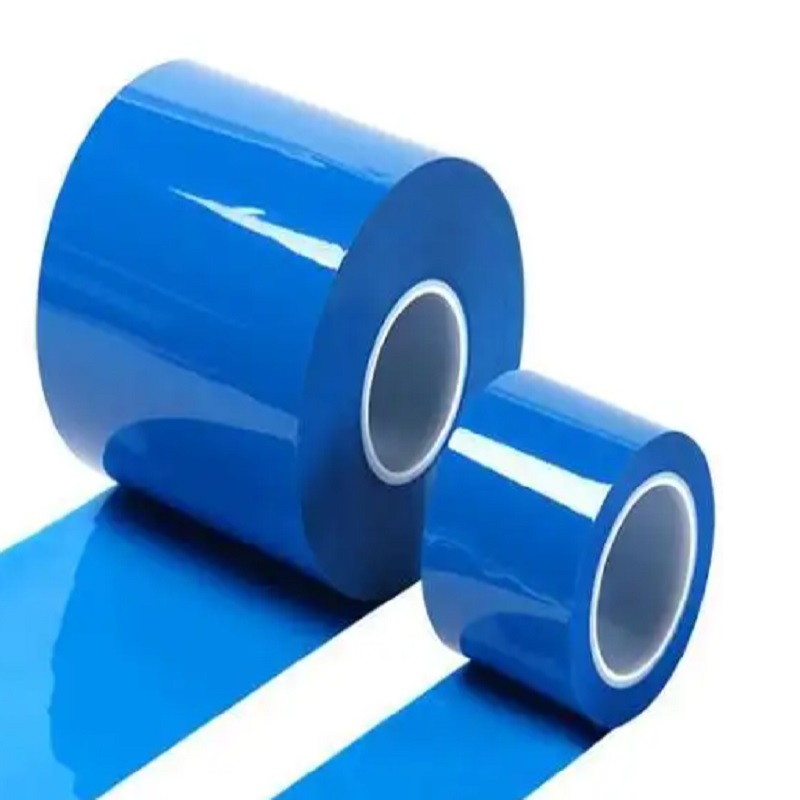
1. PE (Polyethylene) Blue Protective Film: This type of protective film features good flexibility and abrasion resistance, suitable for protection of surfaces such as metal, plastic, and ceramics. It effectively prevents scratches, contamination, and oxidation, preserving the original condition of the protected items for an extended period.
2. PVC (Polyvinyl Chloride) Blue Protective Film: PVC protective films have higher adhesiveness and resistance to acids and alkalis, making them suitable for use in construction, furniture, and electronics. They provide dustproof, waterproof, and light-shielding effects, and also offer a certain degree of cushioning to reduce the risk of damage.
3. PET (Polyethylene Terephthalate) Blue Protective Film: PET material boasts high clarity and temperature resistance, and is widely used in applications that require visual effects, such as glassware and display screens. It effectively blocks dust and grease without leaving adhesive residue or causing reflective glare.
4. TPU (Thermoplastic Polyurethane) Blue Protective Film: TPU materials are known for their excellent elasticity and tear resistance and are commonly used in the automotive industry to protect the surface of body parts or interior components. They effectively insulate external factors that may cause damage to the vehicle's surface without compromising overall aesthetics.
5. CPP (Cast Polypropylene) Blue Protective Film: CPP is a professional surface protection material which, in addition to the characteristics mentioned above, is also known for its excellent weather resistance. The CPP blue protective film is made from high-quality polypropylene materials with outstanding weatherability. It can be used under a variety of harsh weather conditions and effectively prevents damage from ultraviolet rays and corrosive substances. Additionally, CPP blue protective film's excellent adhesive strength ensures it can firmly adhere to the protected surface without peeling or bubbling, and it is resistant to punches, ensuring it does not fall off or shift due to inadequate adhesion over extended use. Moreover, the CPP blue protective film boasts high transparency, processed with a special technique to ensure maximum transparency while maintaining robust functionality. This ensures that the covered objects remain clearly visible, not affecting observation and inspection. The CPP blue protective film is also easy to tear and remove, allowing for smooth detachment when necessary without leaving any residue or adhesive marks, facilitating subsequent handling and replacement of new protective layers. Therefore, the CPP blue protective film is widely used across various industries. For example, in the furniture manufacturing industry, it can serve as packaging material for furniture surfaces to prevent scratches and contamination; in construction, it is often used on materials like glass and metal to prevent damage; and it can also be applied to automotive parts, electronic products, plastic items, and other realms.
2. PVC (Polyvinyl Chloride) Blue Protective Film: PVC protective films have higher adhesiveness and resistance to acids and alkalis, making them suitable for use in construction, furniture, and electronics. They provide dustproof, waterproof, and light-shielding effects, and also offer a certain degree of cushioning to reduce the risk of damage.
3. PET (Polyethylene Terephthalate) Blue Protective Film: PET material boasts high clarity and temperature resistance, and is widely used in applications that require visual effects, such as glassware and display screens. It effectively blocks dust and grease without leaving adhesive residue or causing reflective glare.
4. TPU (Thermoplastic Polyurethane) Blue Protective Film: TPU materials are known for their excellent elasticity and tear resistance and are commonly used in the automotive industry to protect the surface of body parts or interior components. They effectively insulate external factors that may cause damage to the vehicle's surface without compromising overall aesthetics.
5. CPP (Cast Polypropylene) Blue Protective Film: CPP is a professional surface protection material which, in addition to the characteristics mentioned above, is also known for its excellent weather resistance. The CPP blue protective film is made from high-quality polypropylene materials with outstanding weatherability. It can be used under a variety of harsh weather conditions and effectively prevents damage from ultraviolet rays and corrosive substances. Additionally, CPP blue protective film's excellent adhesive strength ensures it can firmly adhere to the protected surface without peeling or bubbling, and it is resistant to punches, ensuring it does not fall off or shift due to inadequate adhesion over extended use. Moreover, the CPP blue protective film boasts high transparency, processed with a special technique to ensure maximum transparency while maintaining robust functionality. This ensures that the covered objects remain clearly visible, not affecting observation and inspection. The CPP blue protective film is also easy to tear and remove, allowing for smooth detachment when necessary without leaving any residue or adhesive marks, facilitating subsequent handling and replacement of new protective layers. Therefore, the CPP blue protective film is widely used across various industries. For example, in the furniture manufacturing industry, it can serve as packaging material for furniture surfaces to prevent scratches and contamination; in construction, it is often used on materials like glass and metal to prevent damage; and it can also be applied to automotive parts, electronic products, plastic items, and other realms.
All Products(0)
Data is empty